
Star earned ad revenues of around Rs 30 billion during last year's IPL. Whether it hits last year's figure will depend on how the economy picks up during the festival season.

While smart boys like the Ruias of Essar, Ajay Piramal, Max India promoter Analjit Singh laughed all the way to the bank, the Tatas, Anil Ambani, Malaysian tycoon T Ananda Krishna of Maxis (which invested in Aircel), Sistema, and Norway's Telenor burnt their fingers, notes Surajeet Das Gupta.

It has invested $2 billion and spent $200 million on its R&D centre in Bengaluru, the largest such centre outside China where some core technologies are under development.

Two of Apple Inc's global vendors -- Wistron and Foxconn (through Han Hoi), which already manufacture Apple phones in India -- and a third entity, Pegatron, which will be setting up a new plant, have applied to the government to be eligible under the PLI scheme for large-scale electronics manufacturers.

Under these rules, telecom gear makers have to share their source codes and get their equipment tested by third-party labs accredited to the government.

India's telecom sector has been through dizzying peaks, troughs, policy U-turns, court battles, brutal competition, and daily controversies. India could go back to a private sector duopoly with just Reliance Jio and Bharti Airtel surviving the mayhem. The third player, Vodafone Idea, could be history.

Companies say that unlike in the US and other countries, in India the high cost of rentals and lower ticket price makes it unviable to run an operation without half the seats available for sale.

Chingari, Roposo, Khabri and Trell are seeing huge traction as people are looking at options to earn incentives from home. Music streaming app Gaana, which is strongly placed in the market with 150 million users, recently opened up its short video platform for subscribers.

Reliance is leveraging the technological change of building a virtualised 5G network which would see the current hardware-dependent networks shift to software-centric platforms.

Apart from digital advertising revenue, both companies want to reach out to the 'next billion' Indian customers. After all, around half of the 1.3 billion population is still not on the net and this represents a challenge as well as an opportunity.
According to software company Mavernir, the new virtualised networks would lead to a saving of 40 per cent in capex and 34 per cent in terms of lower operations cost for operators.

Beside RIL's Jio Switch and Jio Browser, smaller Indian app companies who have been overwhelmed by TikTok are again seeing a big rush - even though till the second week of June they might not have been even listed in the top 100 apps in the country.
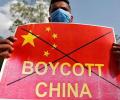
The Indian authorities feared that these apps were transferring consumer data to locations outside the country, especially China, in an unauthorised and surreptitious manner. With servers in India, the data of local consumers would be stored in the country.

JioMeet, which has already got the endorsement of top government officials and politicians, saw a huge surge in its ranking on Google Play, based on its downloads.

The mobile phone manufacturers are planning to plead with the government that the new rules suggested by the DoT could leave them with no option but to stop introducing new phone models in the country if the stringent rules are eventually approved.

Globally, the focus has moved back to India, especially in terms of telecom assets. Vodafone Idea, with some 300 million customers, continues to be attractive with shares available at a low price.

Govt's e-commerce portal asks sellers to specify country origin of products. Now, the commerce & industry ministry has mandated that the Government e-Marketplace, which has seen Rs 55,048 crore worth of transactions till now, adopt this approach in the interest of creating an 'Aatmanirbhar Bharat'.

According to industry insiders, India has 400 million smartphones and is the world's fastest-growing app market. So the addition or deletion of apps impacts the global valuations of these platforms. "Based on calls given by various local organisations to delete Chinese Apps, there will be an impact," said Blaise Fernandes, director at foreign policy think tank Gateway House. "All of them eventually will go the IPO (initial public offering) route so there would be economic impact also."

Steel, cement, aluminum, fertilisers, tractors, two-wheelers, beverages and carbonated drinks, tyres and FMCG could see demand back to near normal levels by the third or the fourth quarter of the financial year, or even earlier.

After the first draft of the Bill was submitted under a committee chaired by Justice B N Srikrishna in 2018, there were objections raised by businesses, especially on the broad restrictions on cross-border data flow.
 © 2026 Rediff.com - Advertise with us - Disclaimer - Privacy Policy - Sitemap - Feedback - About us - Terms of use - Grievances